JAGUAR URANIUM REPORTS RARE EARTH OXIDES ASSOCIATED WITH URANIUM-PHOSPHATE-VANADIUM MINERALIZATION AT THE BERLIN ASSET IN COLOMBIA
PR Newswire
TORONTO, Sept. 24, 2026
- Selected retained-core intervals contain rare earth elements, including neodymium, praseodymium, terbium and dysprosium (magnet rare earths), together with uranium, vanadium and phosphate mineralization.
- 0.63 m @ 3,570 ppm TREO (0.357%) and 607 ppm MREO, the highest TREO value reported from the selected intervals in this resampling program.
- Additional selected intervals returned 1.53 m @ 2,267 ppm TREO and 329 ppm MREO and 0.50 m @ 2,532 ppm TREO and 414 ppm MREO, with reported Nd-Pr-Tb-Dy enrichment within the sampled U-V-phosphate horizon.
- Positioned as a potential Western Hemisphere critical minerals project and within the scope of the recent U.S. – Colombia Critical Minerals Cooperation Agreements
TORONTO, Sept. 24, 2026 /PRNewswire/ -- Jaguar Uranium Corp. (NYSE American: JAGU) ("Jaguar" or the "Company") today announced assay results from its historical drill-core resampling program at the Berlin Uranium–Rare Earth Project in the Department of Caldas, Colombia. Results indicate a polymetallic system that includes rare earth elements with uranium, vanadium and phosphate mineralization in the selected intervals tested, Selected intervals returned up to 3,570 ppm TREO and 607 ppm MREO. The tested core was drilled between 2010 and 2012, and the resampling program was first announced on March 17, 20261.
Rare earth elements (REE) comprise 17 metallic elements, 15 of which are reported. In this press release, analytical results are expressed as Total Rare Earth Oxides (TREO). Praseodymium, neodymium, terbium and dysprosium are reported collectively as Magnet Rare Earth Oxides (MREO) because these elements are used in permanent-magnet applications2.
_____________ |
1 Caution: The company emphasizes that the data presented in this press release constitute "exploration results" under SEC Regulation S-K 1300. This technical information does not represent, nor does it assert, the discovery of a mineral resource or a mineral reserve. The economic viability or metallurgical recovery of these elements has not been established. The results identify additional elements of potential economic interest that are currently being evaluated. |
2 TREO values were calculated by converting the reported concentrations of the analyzed rare earth elements to their stoichiometric oxide equivalents and summing those oxide values. MREO comprises the oxide equivalents of neodymium, praseodymium, terbium and dysprosium. The calculation does not represent a metallurgical recovery or a saleable product specification. Details in Table 1. |
The Company plans to evaluate whether the REO (Rare Earth Oxides) results warrant incorporation into future geological modelling and mineral resource work. Any such work would require additional drilling, continuity assessment, analytical review and other supporting technical studies.
These results constitute exploration results only and do not represent a mineral resource or mineral reserve. The economic viability of the reported mineralization has not been established.
Selected intervals from the resampling program returned the following rare earth element results:
- DDB-041: 0.63 m grading 3,570 ppm TREO and 607 ppm MREO (from 170.57 m to 171.20 m).
- DDB-003: 1.53 m grading 2,267 ppm TREO and 329 ppm MREO (from 80.77 m to 82.30 m).
- DDB-015: 1.00 m grading 2,176 ppm TREO and 349 ppm MREO (from 162.86 m to 163.86 m).
- DDB-068: 0.50 m grading 2,532 ppm TREO and 414 ppm MREO (from 435.86 m to 436.36 m).
The intervals were selected for the purposes described under "Resampling Results and Analytical Procedures" and are not necessarily representative of the mineralized horizon as a whole.
"The initial results indicate that rare earth elements occur with uranium, phosphate and vanadium mineralization in the selected Berlin core intervals. We plan to use these results, together with trenching, geophysics and drilling, to refine the geological model and evaluate the continuity of mineralization. This multi-commodity profile directly aligns with the accelerating strategic cooperation between Colombia and the United States on secure critical-mineral supply chains and nuclear energy." said Steven Gold, President & Chief Executive Officer.
The Barranquilla Accords – U.S.-Colombia Framework on Critical Minerals
On September 8, 2026, the Barranquilla Accords were established as a U.S.-Colombia framework to mark a significant strengthening of U.S.–Colombia cooperation in critical minerals, rare earth elements and civil nuclear energy. The agreements establish a framework to advance secure supply chains, geological knowledge, investment and development of strategic mineral resources. With uranium, rare earth elements, vanadium and phosphate mineralization, Jaguar's Berlin Project is well positioned within this emerging strategic framework and Colombia's growing role in secure critical-mineral and nuclear supply chains.
Background and Historical Data
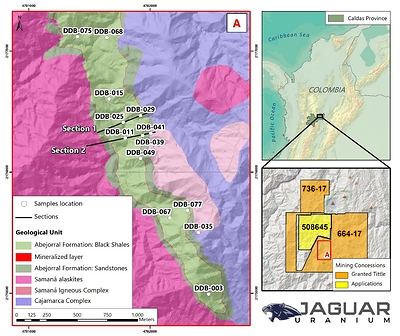
Berlin is an exploration-stage polymetallic project with historically reported uranium mineralization and associated rare earth elements and other commodities, including vanadium, phosphate, nickel, molybdenum, rhenium, yttrium and neodymium. More than 20,000 metres of historical drilling have been reported for the project.
The drill core subject to this resampling program was obtained during two historical exploration campaigns conducted by U3O8 Corp. The first campaign took place in 2010 and 2011, and the second campaign was conducted in 2012.
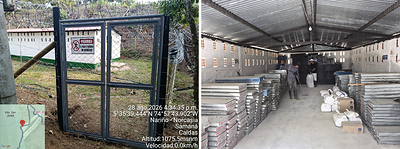
- Storage Location: The drill core has been maintained since 2015 in a secure, locked core storage facility (Figure 2). Originally established by U3O8 Corp., the facility was acquired by Jaguar in 2024. It is situated directly within the project area on mining concession 664-17, where access remains strictly limited to authorized personnel to ensure continuous sample integrity.
- Physical Integrity: The sampled intervals showed no signs of degradation or mineral oxidation.
Resampling Results and Analytical Procedures
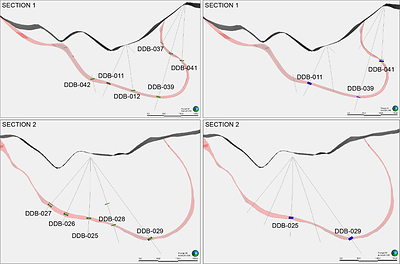
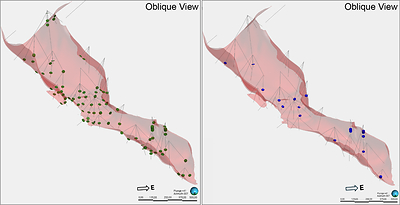
The program selected and analyzed intervals from retained historical core to test REE occurrence and grade variation across the syncline, including samples from both flanks and the hinge and from positions above and below the mineralized horizon (Figure 3 and Figure 4). The Company selected the intervals from the available retained core; the tested samples do not constitute a systematic resampling of all historical mineralized intervals. The current results were not designed to verify any historical estimate. REE concentrations are reported as Total Rare Earth Oxides (TREO) and Magnet Rare Earth Oxides (MREO), and reported intervals are core lengths; true widths have not been determined3.
Sampling and Analytical Procedures
Samples from 13 selected historical drill core intervals were collected, labelled, and submitted for laboratory analysis using procedures intended to preserve sample identity and chain of custody (Table 1). Sample lengths were selected to match the original sample lengths collected by U3O8 Corp. The batch consisted of 150 samples, comprising 136 drill core samples (108 from direct core sampling and 28 pulp samples from previous analyses) and 14 QA/QC inserts. The core samples consisted of quarter-cores cut from the remaining half-cores sampled at average 1-metre lengths (maximum 2.98 m and minimum 0.20 m). Reported intervals are core lengths. True widths have not been determined from the current resampling program. Note that a material proportion of these intervals came from DDB-035 and DDB-077, which were sampled for historical-geochemical verification only and are not representative of true thickness. Full results are provided in Table 2.
Sample preparation was performed at SGS Colombia S.A.S. in Medellín, Colombia (ISO 9001 accredited for sample preparation and management), and chemical analysis was conducted at SGS Callao, Peru (ISO/IEC 17025 for testing and calibration). Whole-rock geochemical analyses were conducted utilizing a dual-method approach to guarantee total element recovery. Samples underwent a four-acid digestion followed by ICP-MS analysis (SGS method ICM40B) for standard trace element characterization. For the accurate quantification of REE in resistate mineral phases, a sodium peroxide fusion with an ICP-MS finish (SGS method ICM90A) was systematically applied. This approach also accounted for any over-limit analyses encountered. Uranium was reported using the ICM40B method to account for over-limit results. Methods and detection limits are indicated on Table 2.
______________ |
Quality Assurance and Quality Control (QA/QC)
The resampling program was executed under strict chain-of-custody protocols from the storage facilities in Colombia to the independent laboratories. As part of the QA/QC program, coarse blank material and certified reference materials (CRM) supplied by OREAS (ORE Research & Exploration Pty Ltd., Australia), an ISO 17034-accredited reference material producer, were inserted. OREAS 474 was used for rare earth control, featuring certified values for TREO and individual rare earth elements, as well as certified U and Th contents. For uranium control, OREAS 121 (~215 ppm U) was used as a low-grade standard and OREAS 124 (~1,845 ppm U) as a high-grade standard.
Of the 150 submitted samples, 14 were QA/QC inserts (9.33% of the total batch), consisting of: 7 coarse blanks (4.67%) and 7 CRMs (4.67%). The CRMs included 3 insertions of OREAS 474 (2.0%), 2 of OREAS 121 (1.33%), and 2 of OREAS 124 (1.33%). Controls were distributed throughout the sampling sequence to avoid clustering. The QP reviewed the blank and certified-reference-material results against the program's acceptance criteria and affirms that the data passed internal and external validation checks and is suitable for the purpose of this exploration disclosure.
Qualified Person Statement
Andrés Cáceres, an AIPG Certified Professional Geologist (CPG), meets the requirements of a Qualified Person under NI 43-101 and Subpart 1300 of Regulation S-K. Mr. Cáceres has reviewed the technical integrity of the data in this press release, evaluated the QA/QC results, and approves the publication of this technical disclosure. Mr. Cáceres is an independent contractor hired by Jaguar Uranium Corp. His experience includes eight years as Project Manager in Colombia with U3O8 Corp., where he led the Berlin Project; four years with the Colombian Geological Survey (SGC) as a Senior Consultant conducting research and exploration programs focused on uranium and rare earth element resources; and two years as Vice President of Exploration for Biondi Resources, leading uranium and rare earth element exploration activities in Brazil.
Andrés Cáceres, CPG, designed the resampling program, supervised data collection and interpreted the scientific and technical results. Because the program used retained historical core and historical pulps, the QP's verification was limited to the available material, storage and chain-of-custody records, resampling procedures, laboratory certificates and QA/QC results reviewed for this program. The QP was the project manager from 2007-2015.
About Jaguar Uranium Corp.
Jaguar Uranium Corp. is a South America-focused uranium exploration company advancing a portfolio of prospective brownfield projects across Colombia and Argentina. The Company's Berlin Project in Caldas Province, Colombia is a district-scale, sedimentary-hosted polymetallic system historically reported to host uranium vanadium, nickel, phosphate, molybdenum, rhenium and zinc. In Argentina, Jaguar is advancing the Laguna Salada Project in Chubut Province and the historic Huemul uranium mine in Mendoza Province. Anchored by a former producing mine, a historic uranium district and exploration projects supported by historical drilling, the Company is focused on advancing and expanding uranium opportunities across the region.
Forward Looking Statements
This press release contains forward-looking statements within the meaning of applicable U.S. and Canadian securities laws. Forward-looking statements include, without limitation, statements regarding planned drilling, trenching and geophysical work; additional continuity testing; future geological modelling; the potential incorporation of REE data into future mineral resource work; the timing and results of future assays and technical studies; and the Company's expectations for the Berlin Project.
Forward-looking statements are based on material assumptions including the reliability of the historical records and retained core available to the Company; the accuracy of the current analytical results; the availability of financing, personnel, equipment and laboratory capacity; continued property access; receipt of required permits; and the Company's ability to complete its planned exploration and technical programs.
Forward-looking statements are subject to known and unknown risks, uncertainties and other factors that may cause actual results to differ materially. These include risks arising from incomplete or inaccurate historical records; limitations inherent in resampling retained core and historical pulps; the selective nature of the tested intervals; uncertainty regarding the continuity, geometry and true width of mineralization; analytical and QA/QC risks; the possibility that additional work will not support inclusion of REE data in a mineral resource estimate; commodity-price volatility; permitting, regulatory, operational and technical risks; and general economic, market and industry conditions.
Forward-looking statements speak only as of the date of this news release. Except as required by applicable securities laws, the Company undertakes no obligation to update or revise any forward-looking statements to reflect events or circumstances after the date of this release or to reflect the occurrence of unanticipated events.
Table 1. Sampled drillhole details.
Hole ID | Easting (m) | Northing (m) | Elevation (m) | Dip | Azimuth | EOH (m) |
DDB-003 | 4782499.20 | 2174992.50 | 898.73 | 79 | 251 | 132.58 |
DDB-011 | 4781845.05 | 2176282.60 | 704.85 | 68 | 263 | 165.53 |
DDB-015 | 4781665.65 | 2176604.99 | 688.49 | 90 | 306 | 193.97 |
DDB-025 | 4781783.68 | 2176410.70 | 724.52 | 90 | 302 | 207.26 |
DDB-029 | 4781784.15 | 2176414.04 | 723.14 | 54 | 68 | 304.80 |
DDB-035 | 4782400.74 | 2175501.94 | 984.43 | 89 | 183 | 355.09 |
DDB-039 | 4782016.19 | 2176324.04 | 829.15 | 74 | 253 | 330.70 |
DDB-041 | 4782016.29 | 2176324.07 | 829.15 | 87 | 249 | 196.59 |
DDB-049 | 4781868.70 | 2176106.93 | 798.95 | 71 | 83 | 224.63 |
DDB-067 | 4782164.16 | 2175623.56 | 879.65 | 90 | 164 | 201.16 |
DDB-068 | 4781634.86 | 2177417.55 | 688.49 | 45 | 178 | 459.72 |
DDB-075 | 4781487.50 | 2177102.10 | 703.63 | 74 | 283 | 332.40 |
DDB-077 | 4782308.99 | 2175679.69 | 894.99 | 89 | 46 | 295.65 |
Note: Coordinates are reported in the CTM12 coordinate system.
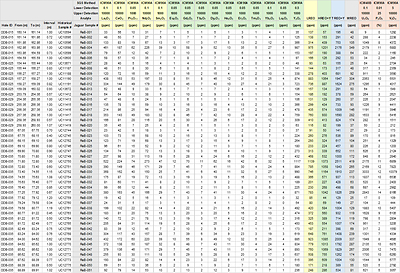
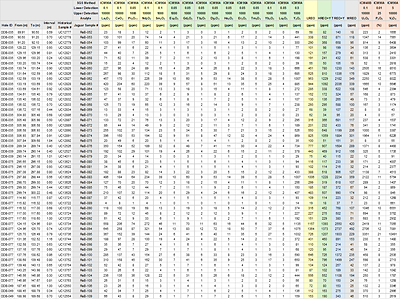
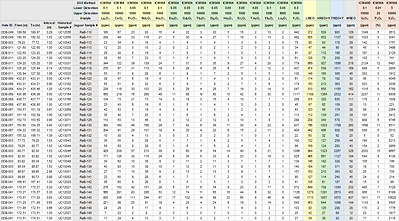
Notes:
- Reported intervals are core lengths; true widths have not been determined.
- The Total Rare Earth Oxide (TREO) calculation strictly corresponds to the stoichiometric sum of the 15 reported element oxides.
- Conversion factors used are: La2O3 (1.1728), CeO2 (1.2284), Pr6O11 (1.2082), Nd2O3 (1.1664), Sm2O3 (1.1596), Eu2O3 (1.1579), Gd2O3 (1.1526), Tb4O7 (1.1762), Dy2O3 (1.1477), Ho2O3 (1.1455), Er2O3 (1.1435), Tm2O3 (1.1421), Yb2O3 (1.1387), Lu2O3 (1.1371), and Y2O3 (1.2699). LREO represents Light Rare Earth Oxides, the sum of the oxide equivalents of Ce, La, Nd, Pr & Sm; HREO represents Heavy Rare Earth Oxides, the sum of the oxide equivalents of Eu, Gd, Tb, Dy, Ho, Er, Tm, Yb, Lu, & Y, and MREO represents Magnetic Rare Earth Oxides the sum of the oxide equivalents of Pr, Nd, Dy & Tb. Other conversion factors used are U3O8 (1.1792), P2O5 (2.2914) and V2O5 (1.7852).
- Whole-rock geochemical analyses were conducted utilizing a dual-method approach to guarantee total element recovery. Samples underwent a four-acid digestion followed by ICP-MS analysis (SGS method ICM40B) for standard trace element characterization. For the accurate quantification of resistate mineral phases, a sodium peroxide fusion with an ICP-MS finish (SGS method ICM90A) was systematically applied.

 View original content to download multimedia:https://www.prnewswire.com/news-releases/jaguar-uranium-reports-rare-earth-oxides-associated-with-uranium-phosphate-vanadium-mineralization-at-the-berlin-asset-in-colombia-302889521.html
SOURCE Jaguar Uranium Corp.