
Vehicle Collision Repair: Knowing Structural from Cosmetic Damage
Little Rock, United States - February 3, 2026 / Bale Collision Center (Downtown) /
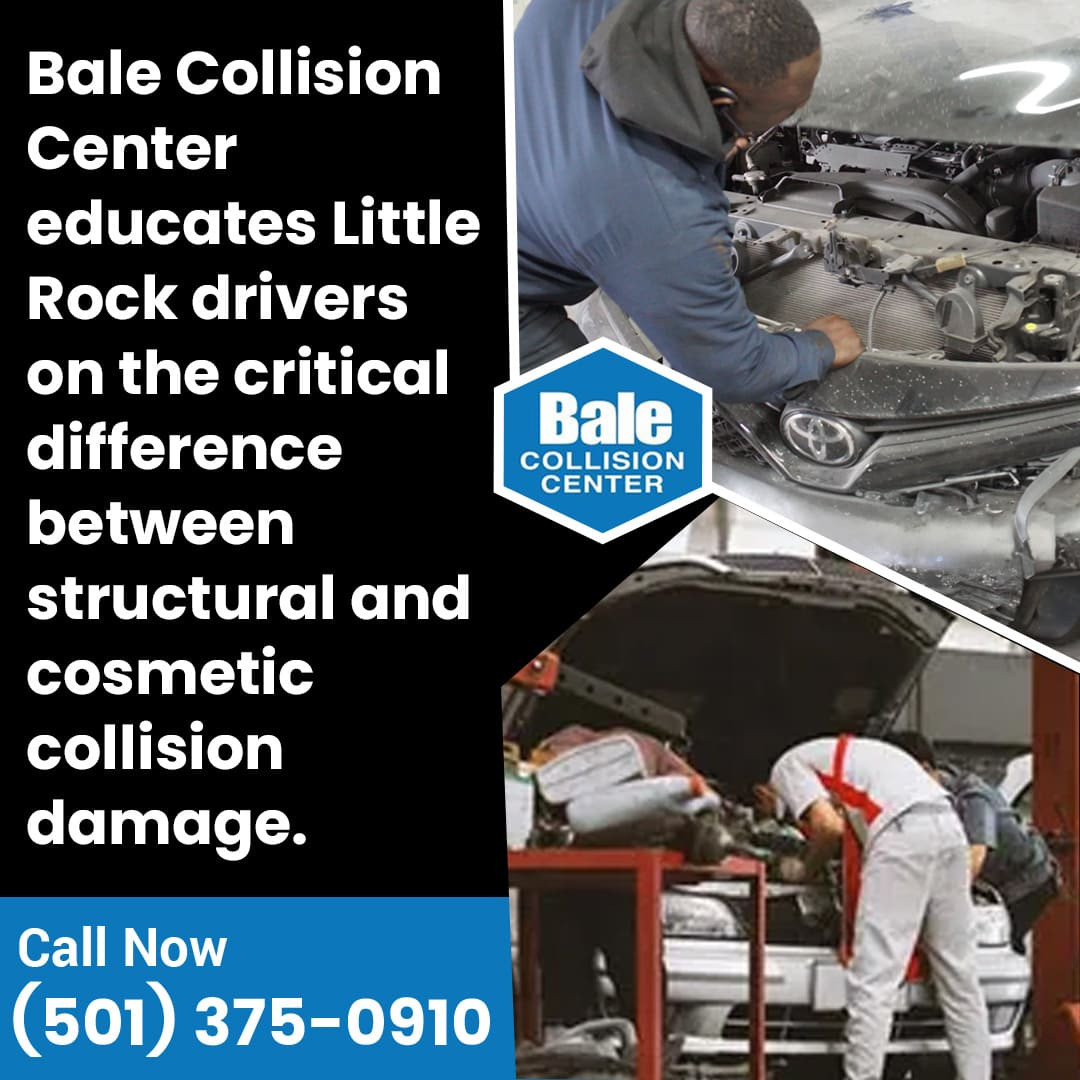
Little Rock, AR - Bale Collision Center (Downtown) in Little Rock is educating drivers about the difference between structural and cosmetic damage following vehicle collisions and how that distinction impacts safety, insurance handling, and repair outcomes. Professional assessment and repair at a trusted auto collision center protect vehicle integrity, performance, and long‑term value.
Modern vehicles integrate engineered structures, advanced safety systems, and unibody design that make correct damage evaluation essential. Structural damage affects the foundation and crash protection elements of a vehicle, while cosmetic damage involves surface panels and exterior trim. Recognizing and addressing structural issues is central to proper vehicle collision repair in Downtown Little Rock, AR.

Cosmetic Damage and Surface Repairs
Cosmetic damage affects visible exterior parts without compromising the core safety structure beneath. Bumper covers, body panels, paint finish, trim pieces, mirrors, and non‑structural glass may sustain dents, scratches, or cracks that influence appearance and resale value but do not directly degrade crashworthiness.
Although cosmetic issues can appear straightforward, they may conceal deeper problems. Surface dents can mask underlying bends in structural parts. Professional assessment at an auto collision center uncovers hidden damage beneath outer panels that initial visual inspection might overlook.
Structural Damage and Vehicle Protection
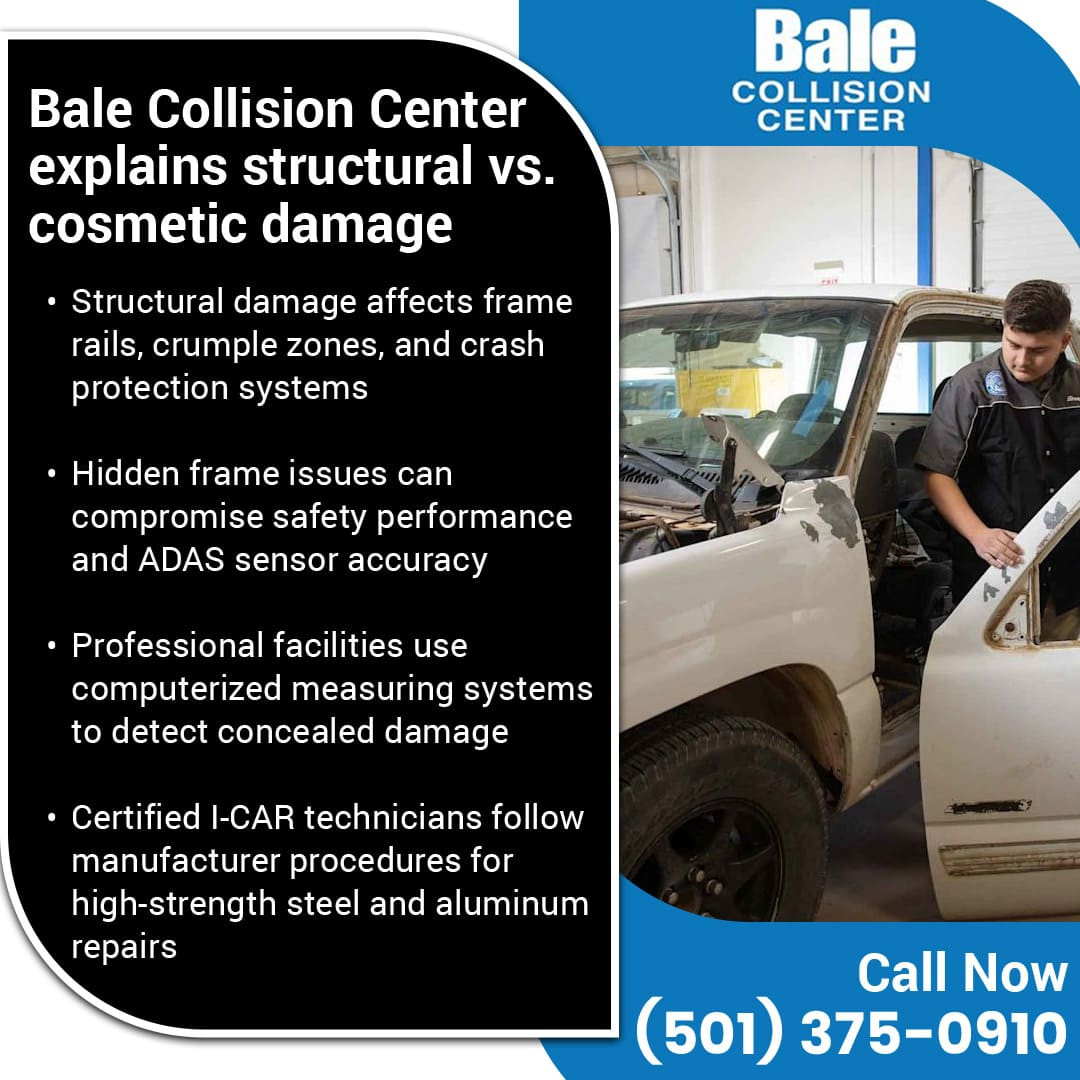
Structural damage affects the elements that support your vehicle’s framework, absorb crash energy, and protect occupants during impacts. Key components include frame rails, engineered crumple zones, A‑B‑C pillars, core supports, and rocker panels. These parts work together to maintain vehicle integrity under stress and in subsequent collisions.
When structural components bend, twist, or weaken, the vehicle’s ability to channel crash forces around passengers diminishes. Repairs that fail to restore correct frame geometry reduce safety performance. Professional collision repair facilities use computerized measuring systems and manufacturer‑specified procedures to identify and correct hidden structural issues that amateur methods often miss.
Hidden Structural Damage and Safety Systems
Hidden structural issues present serious safety risks. Frame rails that appear straight can possess weak spots that worsen under stress. Sensors and cameras used by Advanced Driver Assistance Systems (ADAS) depend on precise alignment with structural points. Misalignment from undetected structural damage can cause inaccurate sensor readings or reduced effectiveness of safety systems integrated into the vehicle’s architecture.
Risks of Incomplete Structural Diagnosis
An incomplete or incorrect structural diagnosis places drivers and passengers at risk on the road. Panels that look aligned on the surface may conceal underlying frame shifts that affect vehicle dynamics, handling, and crash performance. A simple dent near a pillar or rocker panel can indicate deeper structural issues affecting side‑impact protection.
Shops lacking trained technicians or computerized measuring systems may miss these problems, leading to inadequate repairs that do not restore structural strength or safety performance to pre‑collision conditions. Accurate diagnosis and repair using advanced tools and manufacturer repair data distinguish professional facilities from those that focus on cosmetic fixes alone.
Insurance Classification and Damage Evaluation
Insurance companies classify damage as structural or cosmetic to determine appropriate repair procedures and cost estimates. Initial adjuster assessments often focus on visible surface damage, which can delay recognition of hidden structural issues until technicians disassemble the vehicle. Bale Collision Center works closely with all major insurance providers, submitting detailed documentation that includes measurements, photos, and damage analysis.
Supplemental Damage Identification and Repair Authorization
Additional damage discovered during disassembly is a common occurrence in collision repair. Hidden structural problems often appear once panels and components are removed. Professional facilities like Bale Collision Center document these findings and communicate clearly with insurers to obtain supplemental repair authorization without unnecessary delays.
Repair Timeline Differences
Repairs involving only cosmetic elements typically take less time because they do not require extensive disassembly or supplemental insurance approval. Structural repair timelines are longer due to necessary manufacturer‑specified procedures such as frame straightening, welding, recalibration of safety systems, and thorough verification.
Training and Certification in Collision Repair
Repair facilities with proper training and certification produce more reliable outcomes. Certifications such as I‑CAR Gold Class and I‑CAR Platinum technician credentials reflect ongoing technical training and proficiency in structural repair methods, welding, calibration, and measurement verification. These qualifications matter for accurate auto collision repair because modern vehicles require precise procedures for materials like high‑strength steel, aluminum, and adhesive bonds.

Certified Auto Collision Repair in Downtown Little Rock
Bale Collision Center has been a trusted provider of auto collision repair in Downtown Little Rock since 1952. The facility combines decades of experience with modern technology to perform repairs that restore vehicle integrity and maintain safety performance. Contact Bale Collision Center at (501) 375‑0910 or email bccdowntown@baleautomotive.com for a professional damage assessment after a collision. Certified technicians will explain the types of damage present and outline the necessary repair procedures
Contact Information:
Bale Collision Center (Downtown)
100 N Cross Street
Little Rock, AR 72201
United States
Jason Spiller
(501) 375-0910
https://balecollision.com/
Original Source: https://balecollision.com/collision-repair/vehicle-collision-repair-knowing-structural-from-cosmetic-damage/