
Tom Wood Collision Center Explains the Importance of OEM Parts in Collision Repair
Indianapolis, United States - February 9, 2026 / Tom Wood Collision /
Indianapolis, IN - Tom Wood Collision Center is drawing attention to the importance of Original Equipment Manufacturer (OEM) parts in modern collision repair. As vehicles become more complex and interconnected, OEM components play a central role in restoring factory-grade safety, performance, and vehicle value after an accident.

Why OEM Parts Matter in Collision Repair
Preserving Factory Engineering Standards
OEM parts are designed by the same manufacturers who built the original vehicle. These components match the exact dimensions, materials, and structural characteristics required by the vehicle’s design. From front-end impact absorbers to side panels and hood assemblies, OEM parts are engineered to support crash performance, system integration, and structural consistency.
Aftermarket parts, on the other hand, are reverse-engineered and often made with alternate materials or modified designs. While they may appear similar, their fit, finish, and structural behavior can vary in ways that alter how a vehicle responds to future impacts. In crash testing scenarios, vehicles repaired with aftermarket structural parts have shown increased occupant movement and compromised crumple zones when compared to those repaired with OEM components.
Structural Integrity and Vehicle Safety Systems
Today’s vehicles rely on tightly integrated systems involving radar sensors, airbag modules, impact beams, and crash-absorbing structures. Each component plays a role in managing crash forces and minimizing injury. A front bumper, for instance, does more than absorb impact. It also houses radar sensors, contributes to airbag deployment timing, and supports pedestrian safety features.
Maintaining this level of structural and functional integrity requires components that match exact engineering standards. OEM parts are developed with these interactions in mind, ensuring that safety systems continue to function as designed after repairs.
Fit Precision and System Compatibility
Precision matters when it comes to body repair. Poor panel alignment affects more than appearance. It can interfere with aerodynamics, cooling airflow, and the calibration of safety sensors. OEM panels, produced using original factory tooling, provide a precise fit and connector placement without the need for modification.
By contrast, aftermarket parts often require adjustments during installation. Improper tolerances can lead to sensor misalignment, inconsistent panel gaps, or premature wear on brackets and hinges. Components like fenders, bumper covers, and headlight housings may also differ in materials or geometry, affecting how they perform under real-world conditions.
Warranty Protection and Documentation
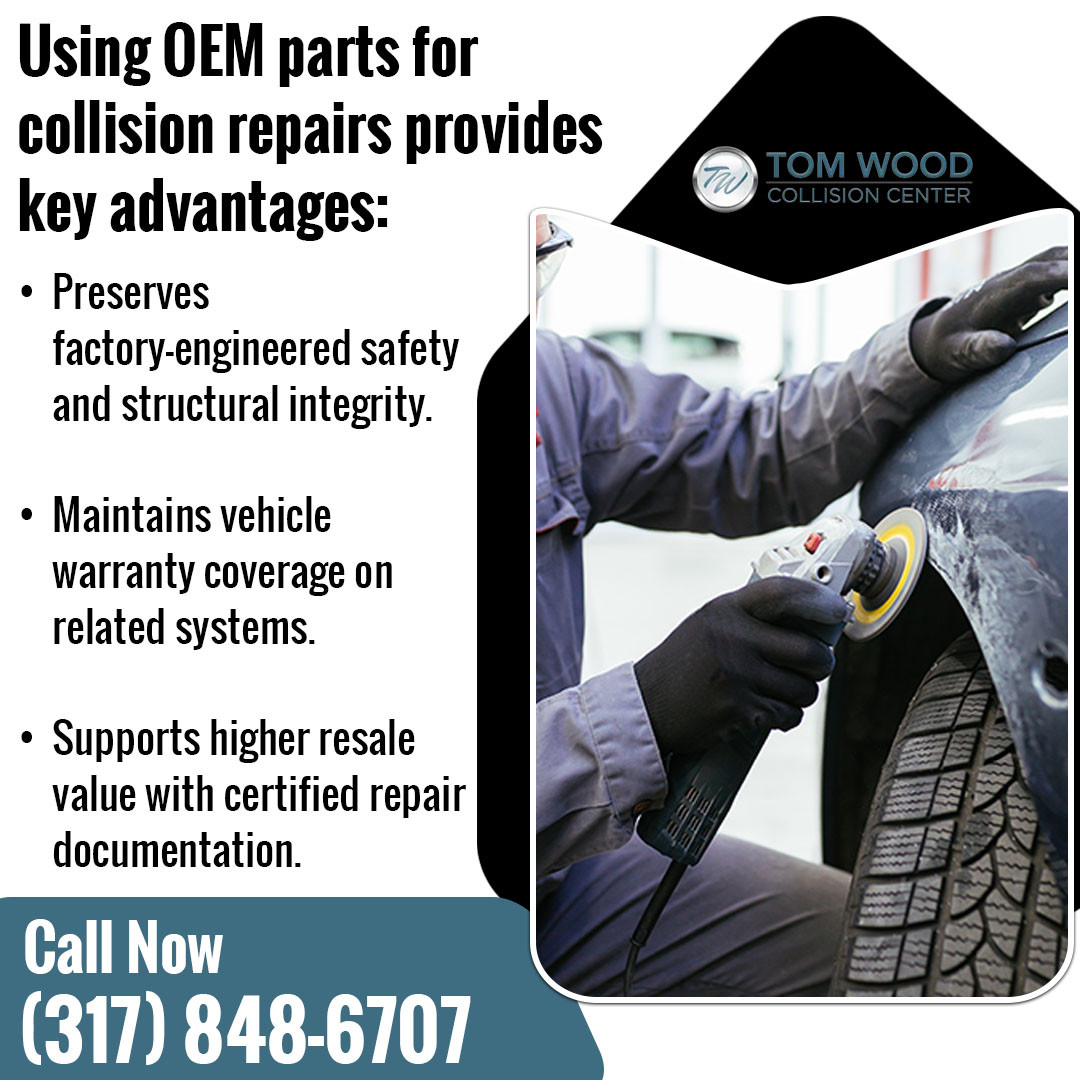
Using OEM components plays a key role in maintaining vehicle warranties. Most manufacturers require original parts and approved repair procedures to preserve warranty coverage on related systems. In Indiana, vehicle owners have the legal right to approve the type of parts used during repairs on vehicles up to six years old. Insurance companies must disclose parts choices and obtain customer consent before proceeding with any non-OEM components.
Proper documentation is essential. Detailed repair estimates, OEM part numbers, source invoices, and photographic proof of installation give drivers confidence in the integrity of their repairs. This transparency supports future warranty claims and protects resale value by clearly demonstrating that the vehicle was restored using manufacturer-grade components.
Supporting Vehicle Resale Value
Auto collision repairs are visible to potential buyers through vehicle history reports. Whether trading in a vehicle or preparing it for resale, records showing OEM part usage and certified repairs enhance its marketability and valuation.
Dealerships and buyers often look for work completed by recognized, certified facilities. Repairs documented with OEM components are viewed more favorably during appraisal, especially when compared to similar vehicles with undocumented or aftermarket repairs.
Tom Wood Collision Center: Commitment to Certified Auto Collision Repair Near Carmel
Tom Wood Collision Center offers auto collision repair near Carmel backed by certifications from over 20 vehicle manufacturers, including Lexus, Volvo, Jaguar, Honda, and Ford. These manufacturer credentials require regular audits, facility inspections, and technician training, ensuring repairs align with strict factory standards.
The team coordinates directly with insurance adjusters to communicate repair procedures, parts requirements, and justifications for OEM components. All structural and safety-related repairs follow approved brand methodologies. Every repair is backed by a limited lifetime warranty for as long as the customer owns the vehicle, reinforcing the center’s commitment to safety and long-term vehicle integrity.

Schedule Certified Collision Repair Today
Drivers near Carmel and the surrounding areas seeking safe, reliable, and manufacturer-approved repairs can contact Tom Wood Collision Center at (317) 848-6707. The center provides certified collision repair near them, restoring vehicle safety, performance, and long-term value without compromise.

Contact Information:
Tom Wood Collision
9727 Bauer Dr E
Indianapolis, IN 46280
United States
Joshua Piccione
(317) 848-6707
https://www.tomwoodcollision.com/


Original Source: https://www.tomwoodcollision.com/blog/2026/february/4/tom-wood-collision-center-explains-the-importance-of-oem-parts-in-collision-repair.htm