UL Research Institutes' Electrochemical Safety Research Institute Appoints Chao-Yang Wang, Ph.D., as Vice President and Executive Director
PR Newswire
EVANSTON, Ill., Aug. 17, 2026
World-renowned battery innovator and electrochemical safety expert to lead Electrochemical Safety Research Institute's next phase of growth
EVANSTON, Ill., Aug. 17, 2026 /PRNewswire/ -- UL Research Institutes today announced that Chao-Yang Wang, Ph.D., an internationally recognized leader in battery science, electrochemical energy systems, and energy storage safety, has been appointed vice president and executive director of its Electrochemical Safety Research Institute. Wang succeeds Judy Jeevarajan, Ph.D., who will continue with UL Research Institutes in a new role as vice president and distinguished scientific advisor.
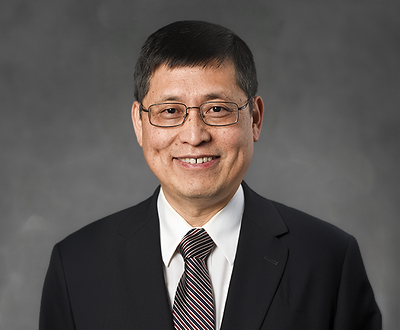
Wang joins UL Research Institutes from The Pennsylvania State University, where he served as the William E. Diefenderfer Chair in Mechanical Engineering; professor of mechanical engineering, chemical engineering, and materials science and engineering; director of the Electrochemical Engine Center; and co-director of the Battery and Energy Storage Technologies Center. During more than three decades in academia and research leadership, he has helped shape the modern understanding of battery performance, safety, manufacturing, and commercialization.
"Dr. Wang is among the world's foremost authorities on battery technology and electrochemical energy systems," said James J. Hudgens, Ph.D., president and chief executive officer of UL Research Institutes. "His scientific leadership, entrepreneurial mindset, and commitment to advancing battery safety make him uniquely qualified to lead the Electrochemical Safety Research Institute as demand grows for safe, reliable energy storage technologies. We are excited to welcome him to UL Research Institutes as we expand our capabilities and deepen our impact on global safety science."
Widely recognized for translating scientific breakthroughs into real-world applications, Wang pioneered electrochemical-thermal modeling techniques that transformed battery design and development across industries. He also invented the self-heating all-climate battery, a technology that enabled electric buses to operate during the 2022 Winter Olympics and has since been commercialized for transportation, defense, and energy storage applications. His research on ultrafast battery charging was recognized by The Guardian as one of the world's top science stories of 2022.
Wang's recent work has focused on advancing the safety of next-generation energy storage technologies, including lithium-metal and solid-state batteries. His research has helped redefine industry understanding of battery safety mechanisms and informed the development of intrinsically safer battery designs.
"Battery technologies are fundamental to the future of transportation, infrastructure, and energy systems," said Wang. "I am honored to join UL Research Institutes and lead the Electrochemical Safety Research Institute at such a pivotal time. The Electrochemical Safety Research Institute has established itself as a trusted leader in electrochemical safety science, and I look forward to working with colleagues across UL Research Institutes to advance research that improves the safety, reliability, and sustainability of energy technologies worldwide."
As vice president and executive director, Wang will oversee the institute's research strategy and operations, lead efforts to expand its experimental and modeling capabilities, and strengthen collaborations across industry, government, academia, and standards-development organizations.
A fellow of the National Academy of Inventors, the Electrochemical Society, and the American Society of Mechanical Engineers, Wang holds approximately 140 issued patents and has authored research cited more than 50,000 times. He earned a bachelor's and master's degree in mechanical engineering from Zhejiang University and a doctorate in mechanical engineering from the University of Iowa. Throughout his career, he has combined scientific excellence with entrepreneurship, founding companies and leading technology commercialization efforts that have brought advanced battery innovations to market.
About the Electrochemical Safety Research Institute
The Electrochemical Safety Research Institute, part of UL Research Institutes, advances the scientific understanding of battery and electrochemical energy storage safety. Through independent research, collaboration, and scientific leadership, the institute helps inform safer products, standards, and practices that support the global transition to electrification and energy storage.
About UL Research Institutes
UL Research Institutes is a nonprofit research organization dedicated to advancing public safety through safety science. Building on the UL legacy of working for a safer world since 1894, UL Research Institutes conducts rigorous, independent research, drawing on expertise across fire safety, electrochemical safety, chemical insights, materials discovery, digital safety, and research experiences and education, to prevent harm and save lives. UL Research Institutes publishes its findings openly and works to guide standards bodies, policymakers, and communities in translating scientific insight into decisions, behaviors, standards, and systems that protect infrastructure and people.
 View original content to download multimedia:https://www.prnewswire.com/news-releases/ul-research-institutes-electrochemical-safety-research-institute-appoints-chao-yang-wang-phd-as-vice-president-and-executive-director-302852300.html
SOURCE UL Research Institutes